
Last updated: April 10, 2026
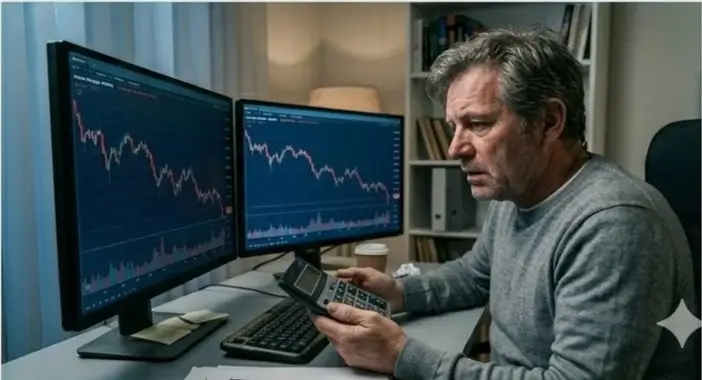
You know exactly what happened.
You took a loss. Maybe two or three in a row. And something inside you snapped. You stopped trading your method. You started trading your emotions. One trade became three. Three became six. By the end of the day, the damage was not from one bad setup — it was from what happened after that first loss.
That is overtrading. And it is not what most people think it is.
Understanding what a trading psychologist does and how the emotional side of trading works is the starting point for fixing this — for good.
A trading psychologist does the same work as a trading therapist. Different title. Same goal.
A successful trading therapist — or trading psychologist — is not focused on making you feel better. They are focused on getting results for you.
They look at your symptoms almost with X-ray vision. Overtrading. Impulse trading. Breaking rules. Revenge trading. Blowing up accounts. They see all of it.
But here is what separates this kind of work from everything else you have tried. The goal is not to manage those symptoms. The goal is to find and fix the ROOT CAUSE that is producing them.
Psychology and trading are inseparable. You cannot fix your trading without fixing what is happening inside you. That is what the psychology of trading — and the psychology in stock market performance — is really about. Not theory. Not journaling. Not positive thinking. Finding the specific cause. And removing it.
When you do that — when you trade mindfully, from a clear and unblocked mind — stock market psychology stops working against you. And starts working for you.
What Overtrading Actually Is — And What It Is Not
Most traders think overtrading means trading too frequently. That is not quite right.
Frequency is a symptom. The real problem is what is causing the decision to enter.
When your method says there is no trade and you enter anyway — that is overtrading. When a loss makes you feel like you need to do something right now — that is overtrading. When you are watching the market move without you and the urgency becomes unbearable — that is also overtrading.
All of these have one thing in common. The decision is coming from emotion. Not from analysis. Not from your rules. From something else entirely — something operating beneath the surface of your conscious awareness.
It is not about how many trades. It is about what caused the trade.
Why You Overtrade — The Subconscious Programs Behind It
Most of your subconscious programming was formed before age eight.
Write that down. Birth to age eight.
Before you were old enough to choose what went in. Before you were old enough to reject the programs that were handed to you by parents, teachers, peers, and early experience. Those programs now run in the background of every trade you take.
The programs that most commonly cause overtrading include:
The "I hate to lose" program. A loss does not feel like information. It feels like a personal attack. The subconscious response is to immediately correct it — by trading again, right now.
The "I need to win right here, right now" program. Recovery feels urgent. Not just financially — emotionally. The account being down feels unbearable. The subconscious pushes the trader back into the market to relieve that unbearable feeling.
The "I cannot miss this move" program. The market moving without you triggers a pain response. The subconscious interprets missing a move as a loss — even though no money was at risk. So it pushes you in, late, just to be in something.
These programs are not character flaws. They are old instructions, running automatically, that were never designed for trading. They respond to one thing — being found and resolved at the source. Everything else is the lid on the boiling pot.
The Stress Cycle That Fires After Every Loss
Here is what happens inside you after a loss — step by step.
The loss triggers a stress response. Cortisol — the stress hormone — floods the system. Research confirms that elevated cortisol directly impairs the prefrontal cortex — the part of the brain responsible for rational decision-making, planning, and impulse control. At the same time, the brain's dopamine reward system pushes toward action — toward doing something that might feel like recovery.
The result: your thinking becomes less clear, and your urgency to act becomes more intense. Exactly the wrong combination when you are sitting in front of a live market.
Loss number two makes it worse. Not twice as bad — significantly worse. Because each loss lands on a nervous system already compromised by the one before it. By loss number three, rational thinking may be almost entirely offline.
That is the stress cycle. And it is not a discipline problem. It is a measurable biological response — one that discipline alone cannot override.
The cycle that discipline alone cannot break. The root must be addressed.
What Is Tilt in Trading — And How It Connects to Overtrading
The word "tilt" comes from poker. When a player goes on tilt, they abandon their strategy and start playing out of frustration, anger, or desperation. In trading, the same thing happens.
You are not trading anymore. You are just clicking.
Tilt in trading has two forms that most traders do not distinguish between. The first is active tilt — taking trade after trade impulsively, chasing losses, doubling size, ignoring stops. The second is passive tilt — freezing completely, missing obvious setups, unable to pull the trigger even when the method is clear.
Both are tilt. Both are the subconscious taking over from the conscious mind. And overtrading is the most expensive version — because active tilt compounds losses fast.
Active tilt costs money fast. Passive tilt costs opportunity. The root cause of both is the same.
How do you know you are on tilt? Revenge trading is one of the clearest signs. But overtrading after losses — taking trades that are not there — is equally telling.
What Happens to Your Brain When You Go on Tilt
When stress spikes — after a bad loss, a missed move, a stopped-out position — the amygdala fires. The amygdala is the brain's alarm system. It is fast. It does not think. It reacts.
At the same time, the prefrontal cortex — where your trading plan, your rules, and your rational judgment live — goes partially offline. Not completely. But enough that your impulse to act overrides your knowledge of what you should do.
This is not weakness. This is neuroscience. The smartest, most disciplined traders in the world experience this. The difference between those who recover and those who do not is what they do in that moment — and what they have worked on underneath the surface.
Why Discipline Cannot Stop Overtrading
Every trader who overtrades has told themselves the same thing.
"Today will be different. I will be more disciplined. I will follow my rules."
And then the loss hits. And nothing is different.
Here is why. Your conscious mind — the part that makes those promises — is a kitten. Your subconscious mind — the part that creates the urgency to re-enter after a loss — is a lion. The kitten cannot control the lion. Not over time. Not under pressure. No matter how loud it roars.
The kitten makes promises. The lion keeps breaking them. That is not weakness — that is how the mind works.
Discipline is the lid on the pot. The heat keeps building underneath. Eventually the lid blows. And after it blows — after the overtrading session, after the blowup — the trader feels guilt, shame, and genuine confusion about why they keep doing the same thing despite knowing better.
The answer is always the same. The root cause has not been addressed. It has been suppressed — temporarily — and then it returns.
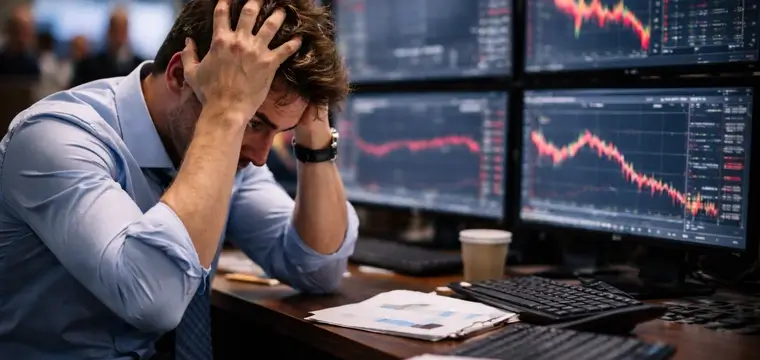
6 Signs You Are Overtrading Right Now
You enter a trade within seconds of being stopped out — not because a new setup appeared, but because you cannot stand sitting flat.
You double your size after a loss, trying to recover it in one trade.
You check your P&L obsessively during open positions instead of watching price action and your method's signals.
You trade perfectly in simulation or during low-pressure conditions — then fall apart with real money on the line.
You feel physical symptoms when the market moves against you — chest tightening, breathing shallowing, heart rate rising — and you keep trading anyway.
You look at your trading log at the end of the day and see trades you cannot explain. Trades that had nothing to do with your setup criteria.
If any of these sound familiar — the problem is not your method. It is what happens to you when pressure hits.
How to Stop Overtrading — Short Term and Long Term
Right Now — Stop the Bleeding
Set a hard daily loss limit before you sit down. Write the number. If you hit it — close the platform. No negotiation in the heat of the moment.
Set a maximum number of trades per session. Not based on how you feel. Based on your method's realistic setup frequency.
Walk away after two consecutive losses without exception. The third trade after two straight losses is almost never taken with a clear head. The stress cycle is already in motion. Step back. Come back the next day.
Before every re-entry after a loss — ask one question: Is this trade coming from my method, or from the need to get back what I just lost? Be honest. The answer matters more than the trade.
These tools reduce the damage. They do not fix the cause.
Both matter. But only one of them lasts.
The Real Fix — Resolving the Root Cause
According to Steve Ira Present, M.S. — 36 years in private consulting practice, 15-year trading psychology specialist — "Every weed has a root. Trim the visible part — it comes back. Yank the root out — it is gone."
Overtrading is the visible part. The root is the specific subconscious program firing when pressure hits — the "I hate to lose" program, the "I need to win right now" program, the unresolved emotional response to losses that formed long before the first trade was ever placed.
Short-term rules manage the symptom. Resolving the root is what stops it — for good. One approach used by some trading psychologists focuses specifically on this — not on managing the emotional response to overtrading, but on finding its root cause and addressing it there. When the program causing the behavior is gone, the urgency to overtrade goes with it. Not because the trader is trying harder. Because what was firing it no longer exists.
If you want to understand more about how working with a specialist on these root causes actually produces lasting change — that conversation starts with understanding what specifically is causing your pattern. That is always individual. That is always different.
About Steve Ira Present, M.S.
Steve Ira Present, M.S., has worked with traders across every market — futures, forex, equities, options — who came in with the same story. Smart. Good method. Could not stop overtrading under pressure.
His work focuses on what no course, book, or journaling practice can reach: the specific subconscious programs that fire when real money is on the line and the losses start coming. He works exclusively one-on-one — never in groups — because two traders with identical overtrading patterns often have completely different causes behind them. Finding that cause is the work.
Final Thoughts
Overtrading will not stop because you decide to try harder.
It will stop when the thing causing it is addressed directly.
That means understanding what overtrading actually is — not a frequency problem, but an emotional state problem. It means understanding that tilt in trading is a real, measurable shift in how your brain functions under pressure. And it means being honest about whether discipline alone has ever actually worked for more than a short period.
For most traders with a serious overtrading pattern — it has not. Because discipline is the lid. And the heat underneath keeps building.
The short-term rules help. Use them. But do not confuse managing the symptom with fixing the cause.
Frequently Asked Questions About Overtrading
Why Do I Keep Overtrading Even When I Know Better?
Because overtrading is caused by subconscious programs — not conscious choice. These programs fire automatically under pressure, after losses, or during losing streaks. Knowing better does not stop them. Resolving the programs at the root does.
What Is Tilt in Trading?
Tilt in trading is a state of emotional overload where rational decision-making breaks down completely. Borrowed from poker psychology, tilt means your subconscious has fully taken over — you are no longer executing a strategy, you are reacting emotionally to price. Overtrading is one of the most common signs that a trader is on tilt.
Does Discipline Stop Overtrading?
Rarely — and not for long. Discipline is a conscious effort. Overtrading starts in the subconscious mind — faster than your conscious mind can catch it. Trying to overpower overtrading with discipline is like clamping a lid on a boiling pot. The pressure keeps building until it explodes.
How Do You Stop Overtrading — Without Relying on Short-Term Fixes That Do Not Last?
Short term — set a hard daily loss limit and walk away after two consecutive losses. Long term — the specific subconscious programs behind the overtrading must be identified and resolved at the root. Managing symptoms temporarily is not the same as fixing the cause.
Van den Bos, R., Harteveld, M., & Stoop, H. (2009). Stress and decision-making in humans: Performance is related to cortisol reactivity, albeit differently in men and women. Psychoneuroendocrinology, 34(10), 1449–1458.
Baik, J.H. (2020). Stress and the dopaminergic reward system. Experimental & Molecular Medicine, 52, 1879–1890.
Beilock, S.L. (2010). Choke: What the secrets of the brain reveal about getting it right when you have to. Free Press (Simon & Schuster).
Douglas, M. (2000). Trading in the Zone. Prentice Hall Press.
Steenbarger, B.N. (2009). The Daily Trading Coach: 101 Lessons for Becoming Your Own Trading Psychologist. Wiley.


