Last updated: March 30, 2026
By Steve Ira Present, M.S.
Trading Psychology Specialist | 36 Years in Private Consulting | 15 Years Working Specifically With Traders
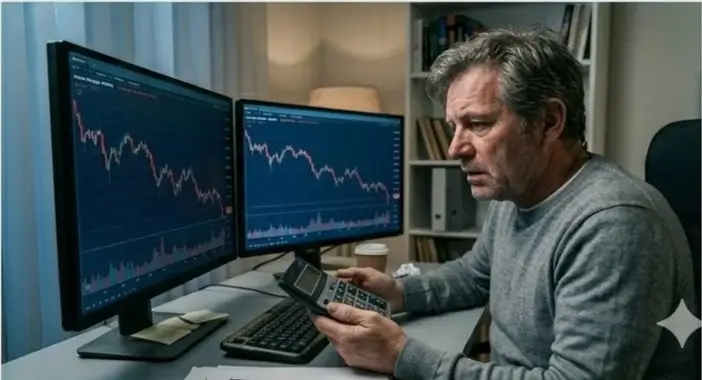
Trading Psychologist: What They Do, Why Traders Need One, and What They Help Fix
What is a trading psychologist? A trading psychologist is a specialist who helps traders address destructive emotional patterns, think clearly under pressure, and stop behaviors such as overtrading, revenge trading, hesitation, FOMO, and impulse trading. Kahneman & Tversky (1979), Econometrica, showed that a loss feels roughly twice as painful as an equivalent gain feels good. That hardwired pain response is what hijacks rational thinking when the market moves against a trader. Discipline alone cannot override hardwired biology. According to Steve Ira Present, M.S. — 36 years in private consulting practice, 15-year trading psychology specialist — "Most traders do not have a knowledge problem. They have an execution problem. And execution breaks down at the subconscious level — not the conscious one."
You already know the basic problem.
Most traders do not fail because they do not know enough.
They fail because they cannot do, consistently, what they already know they should do.
They have a method.
They have rules.
They have a plan.
Then the market moves fast.
A trade goes against them.
They take a loss.
Pressure rises.
And suddenly they are no longer trading their method.
They are trading their emotions.
That is where a trading psychologist comes in.
A trading psychologist does the same work as a trading therapist. Different title. Same goal. Both look at your trading symptoms — overtrading, revenge trading, impulse trading, breaking rules — almost with X-ray vision. And both share the same core goal: not just relieving those symptoms, but finding and fixing the ROOT CAUSE that is producing them.
The Gap Between Knowing and Doing in Trading
What is a trading psychologist? A trading psychologist works with traders to identify and resolve the mental and emotional patterns that interfere with performance — things like overtrading, revenge trading, hesitation, fear, FOMO, impulse trading, and overconfidence after wins. In plain English, they help traders close the gap between knowing what to do and actually doing it when real money is on the line.
That gap is real.
Stress changes judgment. It affects attention. It affects decision-making. It affects behavior.
Van den Bos, Harteveld & Stoop (2009), Psychoneuroendocrinology, confirmed that cortisol reactivity is directly associated with changes in decision performance under stress.
In other words, pressure does not just feel bad. It can directly interfere with the way people think and act.
That matters in trading. Trading is one long series of decisions under uncertainty. Whether you trade stock, futures, or forex — the pressure dynamic is the same.
A good trading psychologist helps traders deal with that pressure better.
Not in theory.
In the moments where they usually lose control.
Why Smart Traders Still Lose Control When Pressure Hits
Why do traders need a trading psychologist? Traders need a trading psychologist when they consistently fail to execute what they already know — when pressure, emotion, or stress overrides their method despite their best efforts at self-control. This is a well-documented performance problem, not a willpower problem, and it shows up across every level of trading from retail day trading to hedge fund management.
Most traders have already had this experience.
They see the setup.
They know the entry.
They know the risk.
They know the plan.
And they still do something else.
They chase.
They freeze.
They move a stop.
They size up when they should not.
They take a bad trade out of frustration.
They break rules they wrote themselves.
Then later they try to explain it.
That is why trading psychology matters.
The problem is often not knowledge.
The problem is execution under pressure.
Sport psychology researchers have been studying the same breakdown in athletes and performers for decades.
Sian Beilock's research on choking under pressure — published in Choke (Free Press, 2010) — showed that skilled people often underperform not because they lack ability. Pressure interferes with execution. That is the problem. The same pattern shows up in stock traders, day trading specialists, and hedge fund managers alike.
That is one reason the topic of trading psychology has become so important. Mark Douglas's Trading in the Zone centers on the same core reality: many traders know what they should do. But they still fail to do it consistently once emotion takes over.
The Trading Problems That Keep Coming Back — and Why
What does a trading psychologist help with? A trading psychologist helps with the specific emotional and behavioral patterns that damage trading results — including overtrading, revenge trading, impulse trading, hesitation, FOMO, rule-breaking, and emotional swings after wins and losses. The goal is not to eliminate emotion but to stop it from hijacking decision-making at critical moments.
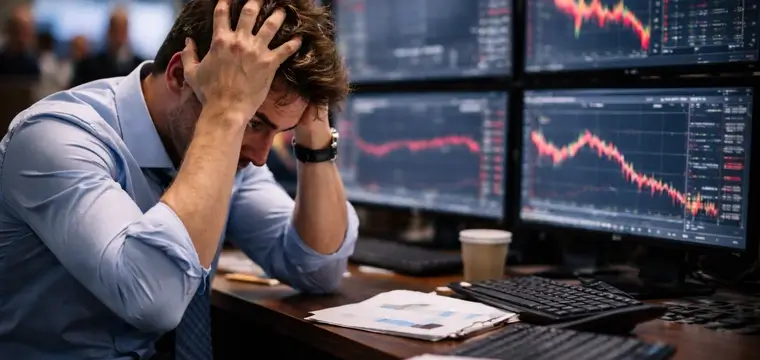
A trading psychologist is not there to hand you a better indicator.
That is not the job.
The job is to help you stop getting in your own way.
In practice, that usually means helping with problems like these:
Overtrading
Taking trades that are not there. Trading because you are bored. Trading because a loss made you feel like you need to do something right now. In day trading especially, where decisions happen in seconds, overtrading is one of the most costly patterns a trader can have.
Revenge Trading
Trying to make the money back immediately. Trading with frustration or anger instead of judgment. If this is your primary challenge, read the full guide on how to stop revenge trading — what causes it and how to fix it at the root cause.
Impulse Trading
Acting first. Thinking second.
Hesitation
Seeing the right trade but not taking it. Then entering too late. Or not entering at all. This is one of the most common forms of fear in trading — and it has a specific subconscious cause.
FOMO
Chasing a move because you cannot stand the feeling of missing it. Fear of missing out is not a discipline problem. Sport psychology researchers identify it as a documented stress response — one that bypasses rational thinking entirely. It is one of the biggest mindset challenges in day trading.
Rule-Breaking
Ignoring your own rules once pressure and emotion take over.
Emotional Swings After Wins and Losses
Getting too high after a streak. Too low after a drawdown. Then trading from that state.
These may look like different problems.
Many times they are different versions of the same deeper pattern.
Pressure rises.
Emotion rises.
Clear thinking drops.
Bad trading follows.
That is the cycle.
Trading Psychologist vs. Trading Coach
What is the difference between a trading psychologist and a trading coach? A trading coach typically works on process, habits, accountability, execution, and sometimes strategy. A trading psychologist works more directly on the mental and emotional side of performance — specifically on why traders keep breaking their habits once pressure rises. They address different levels of the same problem.

A coach may help you build better habits.
A trading psychologist helps you understand why you keep breaking them.
A coach may help you create structure.
A trading psychologist helps when pressure makes you abandon that structure.
Some people in this field use methods related to cognitive behavioral therapy. The American Psychological Association describes CBT as a form of psychological treatment. It focuses on the relationship among thoughts, feelings, and behaviors. It aims to change unhelpful patterns. That framework makes sense in trading — a thought triggers emotion, emotion triggers behavior, and behavior can blow up a good plan.
Others use performance routines, journaling, mindfulness, breath work, or other self-regulation tools. The American Psychological Association notes that mindfulness practices can reduce stress and support mental well-being, which is one reason they show up so often in performance settings.
The simple version is this:
If your method is weak, psychology will not fix that.
But if your method is good and you still cannot follow it, psychology may be the missing piece.
Why Discipline Alone Often Fails
Why does trading discipline fail? Trading discipline fails because it is a conscious effort — but many destructive trading behaviors fire below conscious awareness. Stress research consistently shows that acute pressure shifts judgment and risk behavior before the conscious mind has a chance to intervene. That is why telling yourself to "be disciplined" often does not work in the heat of a trade.
A lot of traders keep trying to solve this with more discipline.
Sometimes that helps.
Often it does not.
Why?
Because discipline is a conscious effort.
But many destructive trading behaviors are not fully conscious in the moment.
They come fast.
A feeling hits.
A thought hits.
Pressure builds.
You react.
By the time you tell yourself to "be disciplined," you may already be halfway into the bad trade.
As Steve Present puts it: "The subconscious mind is not logical. It cannot be talked out of a pattern. You have to work at the level where the pattern lives."
That is why this problem is so frustrating.
You are not always fighting a lack of willpower.
Sometimes you are fighting a stress response.
And stress responses do not usually go away because you gave yourself a lecture.
Research on stress, cortisol, and decision-making helps explain why.
Van den Bos, Harteveld & Stoop (2009), Psychoneuroendocrinology, found that cortisol reactivity is directly linked to decision performance under pressure.
That does not mean every bad trade is biochemical. It does mean the pressure response is real. It cannot always be solved by trying harder.
Behavioral economics researchers have documented this same dynamic for decades. Smart people making predictably poor decisions under financial stress — across stock markets, commodity markets, and finance environments worldwide.

Why the Same Symptom Can Have a Different Root Cause
What does a trading psychologist look for? A trading psychologist looks for the specific triggers, patterns, and emotional states behind a trader's problem — not just the visible behavior. Two traders can share the same symptom and have completely different causes. One overtrades out of fear. Another out of frustration. Another out of overconfidence. Identifying the real cause is where the work begins.
A good trading psychologist does not stop at "I overtrade."
That is too vague.
They want specifics.
When does it happen?
What happened right before it?
What were you feeling?
What were you telling yourself?
What did your body feel like?
Was it after a loss? After a missed move? After a winning streak?
That matters because two traders can have the same visible problem and completely different causes.
One trader overtrades out of fear.
Another overtrades out of frustration.
Another overtrades out of overconfidence.
Same behavior.
Different cause.
And if the cause is different, the work usually has to be different too.
What a Session With a Trading Psychologist Actually Looks Like
How does a trading psychologist work? A trading psychologist typically works through four stages: defining the problem specifically, measuring its intensity, doing the work to address it at its source, and verifying that the change is real — not just temporary relief. The approach varies by practitioner, but serious trading psychology work always includes a way to measure whether progress has actually been made.

Not every practitioner works the same way.
But serious trading psychology work usually has a few common parts.
First, the problem gets defined clearly.
Not just "I struggle."
Not just "I get emotional."
Something more specific.
Second, the pattern gets measured.
That may be done through journaling, self-ratings, trade review, session work, or tracking when the behavior shows up and how intense it feels.
Third, the work begins.
That may include identifying recurring thought patterns, noticing physical stress signals sooner, working on emotional triggers, building pre-trade and post-trade routines, and practicing better responses until they become more natural.
The goal is not to become emotionless.
That is not realistic.
The goal is to become less hijacked by emotion.
That is different.
And it matters.
3 Ways Your Trading Results Can Change When Emotions Stop Running the Show
How can a trading psychologist improve trading results? A trading psychologist improves trading results by helping traders think more clearly under pressure, breaking the repeating self-sabotage loops that cost traders money after losses, and building the consistency that turns a good method into steady performance over time.
1. They help you think more clearly under pressure
Pressure changes performance.
That is true in sports. It is true in finance. It is true in trading.
Stress can interfere with decision-making, especially when money, uncertainty, and recent losses are involved. Research on cortisol and decision performance — including Van den Bos, Harteveld & Stoop (2009), Psychoneuroendocrinology — helps explain why. Sport psychology has documented the same breakdown in elite athletes for decades. The mechanism is the same whether you are a day trading specialist, a stock trader, or a hedge fund analyst.
A trading psychologist helps traders see that shift sooner and respond to it better.
That alone can reduce a lot of damage.
2. They help break repeating self-sabotage loops
Most traders do not have random problems.
They have patterns.
Loss.
Pressure.
Urgency.
Bad trade.
More pressure.
Another bad trade.
That pattern repeats until something changes.
A trading psychologist helps the trader see that loop clearly and work on the part of the loop that keeps firing.
That is where real change often starts.
3. They help traders become more consistent
Consistency is not just about having rules.
It is about being able to follow those rules when the market is doing its best to knock you off balance.
That is the real test.
A trader may not become perfect. Nobody does.
But they may become steadier.
Fewer impulse trades.
Cleaner decisions.
Better recovery after losses.
More respect for their own plan.
That is real progress.
Signs the Problem Is Not Your Method — It Is What Pressure Does to You
Do you need a trading psychologist? You may need a trading psychologist if you know your rules but keep breaking them, your simulator performance is significantly better than your live performance, or the same mistake keeps returning after stress and losses despite your genuine effort to stop it. These are signs that the problem is not knowledge or method — it is what pressure does to your execution.

Not every trader does.
Some traders improve a lot just by getting more experience, tightening risk, and keeping a more honest journal.
But some traders stay stuck for years.
They know what to do.
They keep not doing it.
They keep paying for that gap.
You may need a trading psychologist if:
— you know your rules but keep breaking them
— your simulator performance is much better than your live performance
— the same mistake keeps coming back after stress or losses
— you feel panic, tightness, urgency, or mental freezing while trading
— one bad trade ruins the next several trades
— you keep trying to fix a mental problem with method changes alone
If that sounds familiar, the issue may not be your strategy.
It may be what happens to you when pressure hits.
What Separates a Real Trading Psychologist From Generic Coaching
What should you look for in a trading psychologist? Look for someone who understands performance under pressure — not just stress in a general sense, but actual trading stress including drawdowns, missed moves, and the emotional effect of real money on the line. They should explain their process clearly, measure results before and after, and recognize that two traders with the same visible problem often need very different work.
If you are considering working with someone in this field, look for a few things.
First, they should understand performance under pressure.
Second, they should understand traders.
Not just stress in a general way. Actual trading stress. Drawdowns. Missed moves. Streaks. Risk. Urgency. The emotional effect of money on the line.
Third, they should be able to explain their process clearly.
Not vague promises. Not foggy language. Clear language about what they do, how they measure progress, and what you can expect. A good trading mindset does not develop from vague coaching. It develops from specific, targeted work on specific patterns.
Fourth, they should understand that one-size-fits-all work has limits.
Two traders can look the same from the outside and still need very different work.
That matters more than most people realize.
About Steve Ira Present, M.S.

Who is Steve Ira Present? Steve Ira Present, M.S., is a trading psychology specialist with 36 years in private consulting and 15 years working specifically with traders. He works one-on-one — not in groups — because the same visible trading problem can come from very different causes in different people. He offers a full money-back guarantee on the first session, backed by 15 years of results.
Steve Ira Present, M.S., has spent 36 years in private consulting and the last 15 years working specifically with traders. His work focuses on the part of trading that most method-based programs do not fix: the emotional and mental patterns that take traders out of their plan once pressure rises.
He works one-on-one, not in groups, because the same visible trading problem can come from very different causes in different people. One trader may revenge trade because of anger. Another because of fear. Another because loss feels unbearable. Same behavior. Different cause. That is why individualized work matters.
Final Thoughts
A trading psychologist helps with the part of trading that strategy alone cannot fix.
They do not replace an edge.
They do not replace risk management.
They do not replace skill.
But they can help traders stop turning a workable method into poor results through fear, urgency, hesitation, overconfidence, and emotional decisions.
That is not a small thing.
For many traders, it is the thing.
Because the real problem is often not a lack of knowledge.
It is the inability to stay clear and steady when the pressure gets real.
That is exactly where a trading psychologist can help.
Schedule a no-cost introductory consultation with Steve Ira Present, M.S.
Something specific is behind your trading problems. Find out what it is at the root cause.
Frequently Asked Questions About Trading Psychologists
What does a trading psychologist do?
A trading psychologist helps traders identify and work through the emotional patterns, thought habits, and stress reactions that interfere with sound trading decisions.
Can a trading psychologist help with overtrading?
Yes. Overtrading is one of the most common problems in trading psychology work. The point is not just to stop the behavior for a day. The point is to understand what is causing it — and addressing that trigger.
Is a trading psychologist the same as a therapist?
Not always. Some come from licensed psychology backgrounds. Others come from coaching or performance backgrounds. What matters most is whether they understand both human behavior and the realities of trading.
Can beginner traders benefit from this?
Yes. Beginners can benefit by building better mental habits early. Experienced traders can benefit because they usually know by then that more knowledge alone does not fix recurring psychological mistakes.
What books are worth reading on trading psychology?
A good place to start is Trading in the Zone by Mark Douglas, Choke by Sian Beilock. Those books approach performance and pressure from different angles, but all are useful for understanding why execution breaks down and how it can improve.
References
Van den Bos, R., Harteveld, M., & Stoop, H. (2009). Stress and decision-making in humans: Performance is related to cortisol reactivity, albeit differently in men and women. Psychoneuroendocrinology, 34(10), 1449–1458. https://doi.org/10.1016/j.psyneuen.2009.04.016
Sapra, S., Beavin, L.E., & Zak, P.J. (2012). A combination of dopamine genes predicts success by professional Wall Street traders. PLOS ONE, 7(1), e30844. https://doi.org/10.1371/journal.pone.0030844
Beilock, S.L. (2010). Choke: What the secrets of the brain reveal about getting it right when you have to. Free Press (Simon & Schuster).
American Psychological Association. (n.d.). What is cognitive behavioral therapy? Retrieved from https://www.apa.org/ptsd-guideline/patients-and-families/cognitive-behavioral
Douglas, M. (2000). Trading in the Zone. Prentice Hall Press.


